
The soft mist of STIOLTO RESPIMAT: Patients with COPD can feel the difference1


Just a slow, deep breath is required–no need to sharply inhale1*

Nebulized medicine reaches deep into the lungs2,3†

Soft mist delivery of STIOLTO RESPIMAT helps patients inhale their medicine1*
-
*
As with all inhaled drugs, the actual amount of drug delivered to the lung may depend on patient factors, such as the coordination between the actuation of the inhaler and inspiration through the delivery system. The duration of inspiration should be at least as long as the spray duration (1.5 seconds).
-
†
It is important to note that a correlation between lung deposition and clinical efficacy has not been established.
Take a closer look at how STIOLTO RESPIMAT is delivered into the lungs1,3-5
The RESPIMAT Soft Mist Inhaler was developed using a patient-focused design approach.3 The RESPIMAT inhaler delivers medication in a soft mist.*3-5
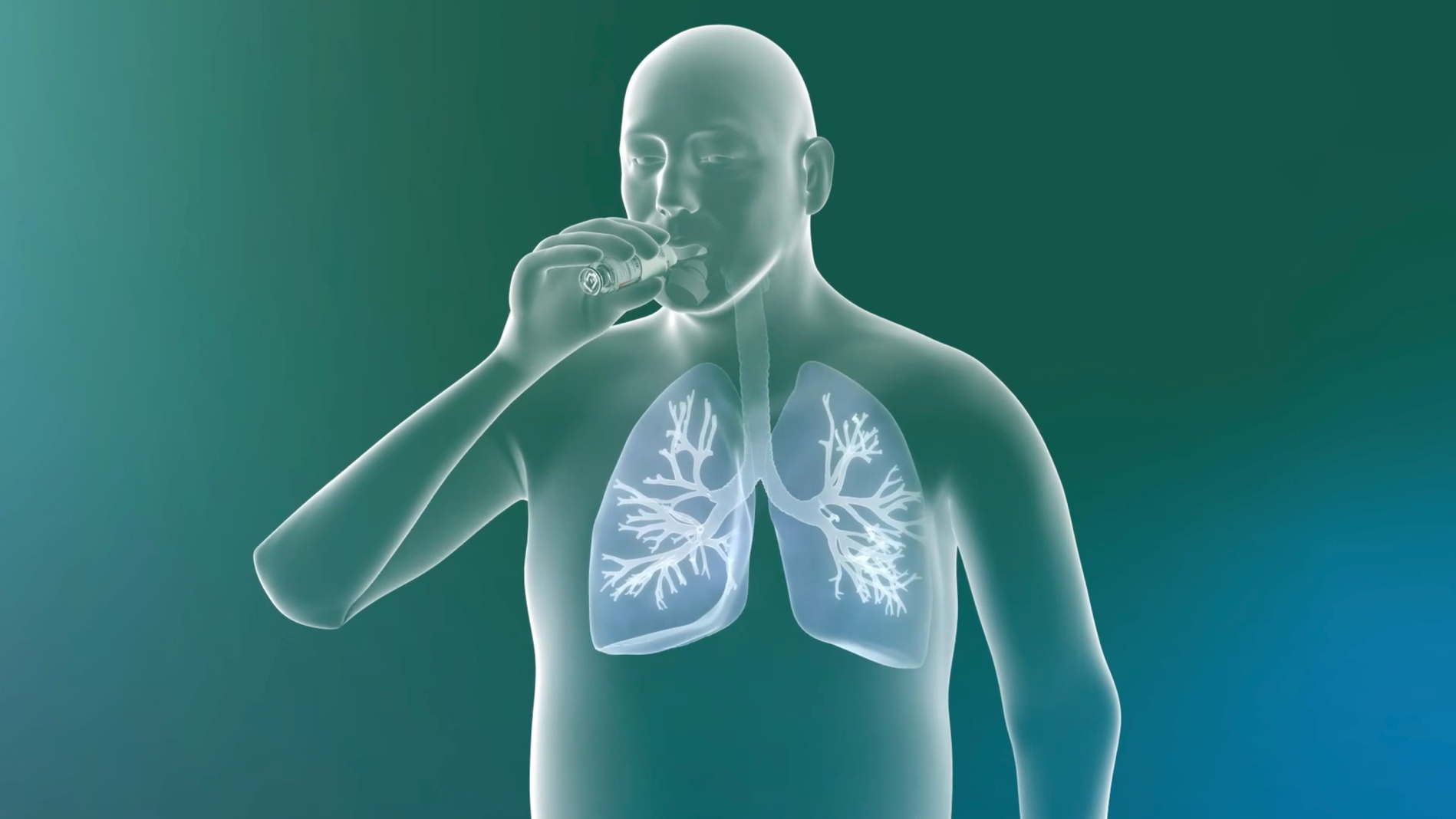
This means patients take a slow, deep breath — no need to sharply inhale.3-5 The soft mist lasts approximately 1.5 seconds, and helps patients inhale their medicine.*1
Nebulized medicine reaches deep into the lungs.†3-5 Small particle-sized droplets are deposited into peripheral airways, supporting lung deposition.3-5
-
*
As with all inhaled drugs, the actual amount of drug delivered to the lung may depend on patient factors, such as the coordination between the actuation of the inhaler and inspiration through the delivery system. The duration of inspiration should be at least as long as the spray duration (1.5 seconds).
-
†
It is important to note that a correlation between lung deposition and clinical efficacy has not been established.
Backed by Decades of Evidence2,6-13
The RESPIMAT Soft Mist Inhaler clinical profile has been established across two decades, a large and diverse patient population, and a robust body of controlled and real-world research.
Years of clinical experience
Patient across studies
Randomized controlled & real-world studies
Patient Considerations for STIOLTO RESPIMAT
Consider STIOLTO RESPIMAT for your appropriate patients1,5,14

The RESPIMAT inhaler delivers a soft mist for inhalation with a slow, deep breath*3,5
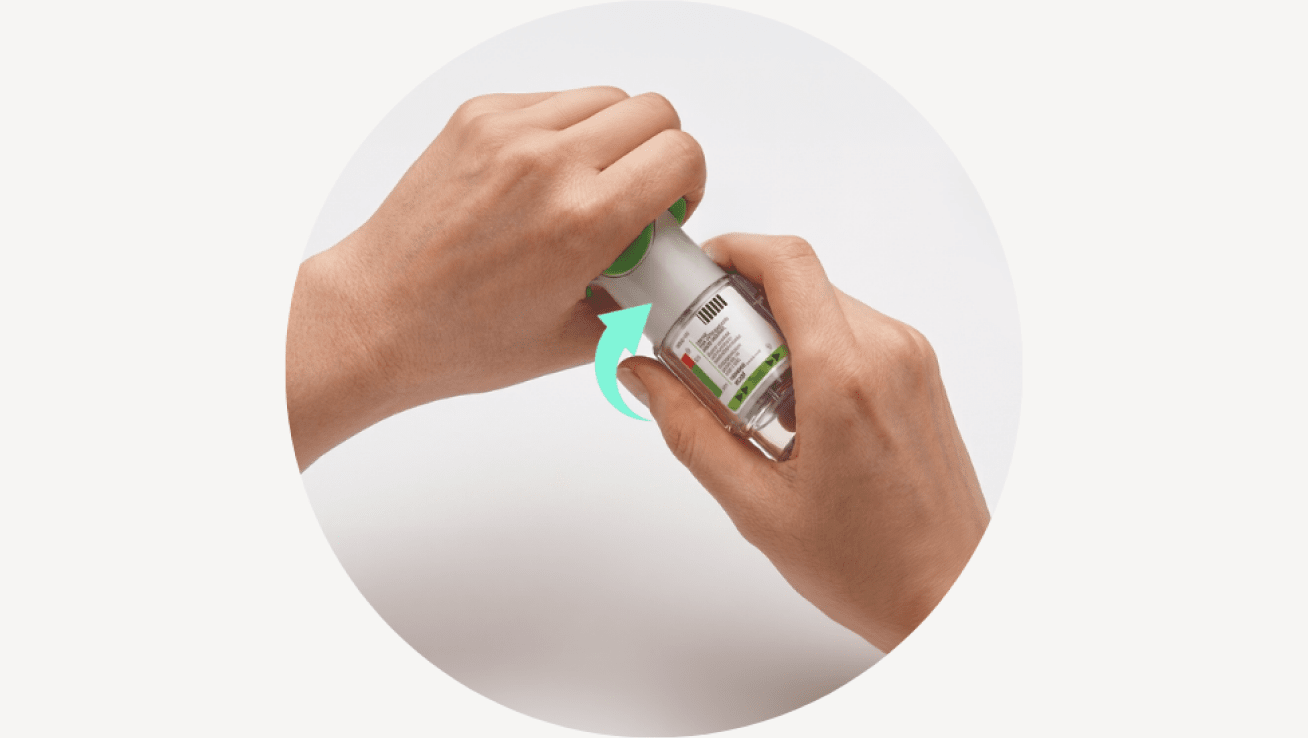
The RESPIMAT inhaler has a turn-and-press mechanism1,14
-
*
As with all inhaled drugs, the actual amount of drug delivered to the lung may depend on patient factors, such as the coordination between the actuation of the inhaler and inspiration through the delivery system. The duration of inspiration should be at least as long as the spray duration (1.5 seconds).
Teaching Patients Proper Inhaler Use: The Turn-Open-Press (T-O-P) Technique1
Based on the STIOLTO RESPIMAT Instructions for Use (January 2025). Use the following as a patient teaching guide and a basis for in-office demonstration.
Step | Action | What to Teach the Patient | Common Error to Watch For |
T — Turn | Turn the clear base | Keep the cap closed. Turn the clear base in the direction of the arrows on the label until it clicks (half a turn). A full half-turn is required—the device will not dispense without it. | Stopping the turn before it clicks. Remind patients: turn until you hear the click. |
O — Open | Open the cap | Open the cap until it snaps fully open. Do not open the cap before completing the Turn step. | Opening the cap before completing the turn, or not opening it fully. |
P — Press | Press and inhale | Breathe out slowly and fully. Close lips around the mouthpiece without covering the air vents. Point the inhaler to the back of the throat. While taking a slow, deep breath through the mouth, press the dose-release button and continue to breathe in. Hold breath for 10 seconds or as long as comfortable. Repeat T-O-P for a total of 2 puffs. | Inhaling before pressing, or pressing without a coordinated breath. Reassure patients that just a slow, deep breath is required to inhale the medicine and to hold breath for 10 seconds or as long as comfortable. |
Daily Dose | Two puffs, once daily | Take 2 puffs (2 complete T-O-P sequences) at the same time every day. Close the cap after the second puff. | Taking only one puff, or taking doses more than once a day. |
Before a patient uses STIOLTO RESPIMAT for the first time, the inhaler must be primed. Walk patients through the following steps at their first appointment:
Insert the cartridge narrow-end first into the inhaler and press firmly until it clicks
Replace the clear base and turn, open, and press until an aerosol cloud is visible. Repeat 3 more times
For complete instructions to review with your patient on how to prepare the inhaler for first use click here
The inhaler is now primed and ready for use
If not used for more than 3 days: actuate once before use
If not used for more than 21 days: repeat the priming process (turn, open, press until mist visible; repeat 3 times)
Clean the mouthpiece (including the metal part inside) with a damp cloth or tissue at least once a week
Store at room temperature between 68°F to 77°F (20°C to 25°C). Do not freeze
Discard the inhaler 3 months after the cartridge is inserted, when the dose indicator reaches zero, or when it expires—whichever comes first
STIOLTO® RESPIMAT® (tiotropium bromide and olodaterol) Inhalation Spray is a combination of tiotropium, an anticholinergic, and olodaterol, a long-acting beta2-adrenergic agonist (LABA), indicated for the long-term, once-daily maintenance treatment of patients with chronic obstructive pulmonary disease (COPD), including chronic bronchitis and/or emphysema.
Important Limitations of Use
STIOLTO is NOT indicated to treat acute deterioration of COPD and is not indicated to treat asthma.
CONTRAINDICATION
Use of a LABA, including STIOLTO RESPIMAT, without an inhaled corticosteroid (ICS) is contraindicated in patients with asthma.
STIOLTO is contraindicated in patients with hypersensitivity to tiotropium, ipratropium (atropine derivatives), olodaterol, or any component of this product.
In clinical trials and postmarketing experience with tiotropium, immediate hypersensitivity reactions, including angioedema (including swelling of the lips, tongue, or throat), itching, or rash have been reported. Hypersensitivity reactions were also reported in clinical trials with STIOLTO.
WARNINGS AND PRECAUTIONS
LABA as monotherapy (without an ICS), for asthma increases the risk of asthma-related death, and in pediatric and adolescent patients, increases the risk of asthma-related hospitalizations.
Do not initiate STIOLTO in patients with acutely deteriorating COPD, which may be a life-threatening condition, or used as rescue therapy for acute symptoms. Acute symptoms should be treated with an inhaled short-acting beta2-agonist.
STIOLTO should not be used more often or at higher doses than recommended, or with other LABAs as an overdose may result.
If immediate hypersensitivity reactions occur, such as urticaria, angioedema, rash, bronchospasm, anaphylaxis, or itching, discontinue STIOLTO at once and consider alternative treatment. Patients with a history of hypersensitivity reactions to atropine or its derivatives should be closely monitored for similar hypersensitivity reactions to STIOLTO.
If paradoxical bronchospasm occurs, discontinue STIOLTO immediately and institute alternative therapy.
STIOLTO can produce a clinically significant cardiovascular effect in some patients, as measured by increases in pulse rate, systolic or diastolic blood pressure, and/ or symptoms. If such effects occur, STIOLTO may need to be discontinued.
Use caution in patients with convulsive disorders, thyrotoxicosis, diabetes mellitus, ketoacidosis, in patients with known or suspected prolongation of the QT interval, and in patients who are unusually responsive to sympathomimetic amines.
Use with caution in patients with narrow-angle glaucoma. Instruct patients to contact a physician immediately if signs or symptoms of acute narrow-angle glaucoma develop.
Use with caution in patients with urinary retention especially in patients with prostatic hyperplasia or bladder-neck obstruction. Instruct patients to consult a physician immediately should any of these signs or symptoms develop.
Patients with moderate to severe renal impairment (creatinine clearance of <60 mL/min) should be monitored closely for anticholinergic side effects.
Be alert to hypokalemia and hyperglycemia.
ADVERSE REACTIONS
The most common adverse reactions with STIOLTO (>3% incidence and higher than an active control) were: nasopharyngitis, 12.4% (11.7%/12.6%), cough, 3.9% (4.4%/3.0%), and back pain, 3.6% (1.8%/3.4%).
DRUG INTERACTIONS
Use caution if administering adrenergic drugs because sympathetic effects of olodaterol may be potentiated.
Concomitant treatment with xanthine derivatives, steroids, or diuretics may potentiate any hypokalemic effect of olodaterol.
Use with caution in patients taking non–potassium-sparing diuretics, as the ECG changes and/or hypokalemia may worsen with concomitant beta-agonists.
The action of adrenergic agents on the cardiovascular system may be potentiated by monoamine oxidase inhibitors or tricyclic antidepressants or other drugs known to prolong the QTc interval. Therefore, STIOLTO should be used with extreme caution in patients being treated with these drugs. Use beta-blockers with caution as they not only block the therapeutic effects of beta-agonists, but may produce severe bronchospasm in patients with COPD.
Avoid co-administration of STIOLTO with other anticholinergic-containing drugs as this may lead to an increase in anticholinergic adverse effects.
STIOLTO is for oral inhalation only.
The STIOLTO cartridge is only intended for use with the STIOLTO RESPIMAT inhaler.
Inform patients not to spray STIOLTO into the eyes as this may cause blurring of vision and pupil dilation.
CL-STO-100048 6.5.2019
Please see full Prescribing Information, Patient Information, and Instructions for Use for STIOLTO RESPIMAT.
References
-
STIOLTO RESPIMAT [prescribing information]. Ridgefield, CT: Boehringer Ingelheim Pharmaceuticals, Inc; January 2025.
-
Global Initiative for Chronic Obstructive Lung Disease (GOLD). Global Strategy for Prevention, Diagnosis and Management of COPD: 2026 Report.
-
Wachtel H, Kattenbeck S, Dunne S, Disse B. The RESPIMAT® development story: patient-centered innovation. Pulm Ther. 2017;3(1):1-12.
-
Anderson P. Use of RESPIMAT® Soft Mist™ Inhaler in COPD patients. Int J Chron Obstruct Pulmon Dis. 2006;1(3):251-259.
-
Iwanaga T, et al. Clin Drug Investig. The Respimat Soft Mist inhaler: Implications of drug delivery characteristics for patients. Clin Drug Investig. 2019;39(11):1021–1030.
-
O'Donnell DE, Flüge T, Gerken F, Hamilton A, Webb K, Aguilaniu B, Make B, Magnussen H. Effects of tiotropium on lung hyperinflation, dyspnoea and exercise tolerance in COPD. Eur Respir J. 2004 Jun;23(6):832-40.
-
Vestbo J, Vogelmeier CF, Small M, Siddall J, Fogel R, Kostikas K. Inhaled corticosteroid use by exacerbations and eosinophils: a real-world COPD population. Chron Obstruct Pulmon Dis. 2019;14:853-861
-
Palli SR, Zhou S, Shaikh A, Willey VJ. Effect of compliance with GOLD treatment recommendations on COPD health care resource utilization, cost, and exacerbations among patients with COPD on maintenance therapy. J Manag Care Spec Pharm. 2021 May;27(5):625-637.
-
Tzanakis N, Koulouris N, Dimakou K, et al. Classification of COPD patients and compliance to recommended treatment in Greece according to GOLD 2017 report: the RELICO study. BMC Pulm Med. 2021;21(1):216.
-
Quint JK, et al. Effectiveness and Safety of COPD Maintenance Therapy with Tiotropium/Olodaterol versus LABA/ICS in a US Claims Database. Adv Ther. 2021 May;38(5):2249-70.
-
Halpin DMG, de Jong HJI, Carter V, Skinner D, Price D. Distribution, Temporal Stability and Appropriateness of Therapy of Patients With COPD in the UK in Relation to GOLD 2019. EClinicalMedicine. 2019 Jul 24;14:32-41.
-
Singer D, et al. Healthcare Resource Utilization, Exacerbations, and Readmissions Among Medicare Patients with Chronic Obstructive Pulmonary Disease After Long-Acting Muscarinic Antagonist Therapy Initiation with Soft Mist versus Dry Powder Inhalers. Int J Chron Obstruct Pulmon Dis. 2020;15:3239–3250.
-
SPIRIVA RESPIMAT [prescribing information]. Ridgefield, CT: Boehringer Ingelheim Pharmaceuticals, Inc.; January 2025
-
Luley M-C, et al. Training improves the handling of inhaler devices and reduces the severity of symptoms in geriatric patients suffering from chronic-obstructive pulmonary disease. BMC Geriatrics. 2020;20:398.